
Last Updated: 13.10.2026
Business Plan Development for Investment and Expansion in Saudi Arabia
Saudi Arabia has become one of the region’s most active markets for new investment, business expansion and corporate development. Vision 2030, large-scale infrastructure programmes and continued regulatory reform have created new opportunities across industries, while also raising the level of planning expected from companies entering or expanding in the Kingdom.
For investors and management teams, a business plan in Saudi Arabia needs to go beyond a description of the concept. It should show where demand comes from, how the company will compete, what resources and investment are required, and whether the commercial and financial assumptions are realistic.
Accurate Middle East provides business plan development and business planning services in Saudi Arabia for companies evaluating new ventures, market entry, expansion and investment opportunities. Our work combines market research, competitor analysis, commercial planning and financial modelling to produce a practical plan that can support management decisions, investor discussions and implementation.
For official information on Saudi investment requirements and business regulations, companies can also refer to the Ministry of Investment of Saudi Arabia (MISA).
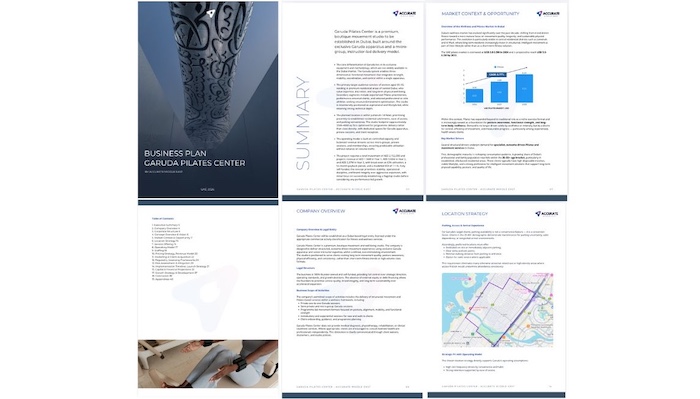
Investor-Ready Business Plans for Saudi Projects
A professionally developed business plan plays a critical role when evaluating opportunities in Saudi Arabia. It should do more than describe the business concept. A strong plan tests whether the proposed model is commercially realistic, identifies the resources required, and sets out how the company can compete and operate within the Saudi market.
For investors and companies considering entry or expansion, the key questions are practical. What is the size of the addressable market? Who are the main competitors? Which licensing and regulatory requirements apply? How much capital is needed to reach a stable operating position? What revenue assumptions are realistic, and what level of return can the investment support under different scenarios?
Our business plan consulting in Saudi Arabia brings these questions together within one structured planning process. Depending on the project, the work may include market research, competitor analysis, operating assumptions, investment requirements, financial modelling and implementation planning. This allows management teams and investors to assess the opportunity on a more informed basis and use the final business plan as a practical decision-making tool rather than a standalone document.
Business Plan Development Services in Saudi Arabia
Professional business plan development in Saudi Arabia is a structured process that turns a commercial idea into a clear investment and operating plan. The purpose is not simply to describe the business, but to test how the proposed model would work in the Saudi market, what resources are required, and whether the financial assumptions are realistic.
Depending on the project, our business plan services in Saudi Arabia may combine market research, competitor analysis, regulatory review, operational planning and financial modelling into one practical framework for decision-making.
Market Analysis
Market analysis is one of the foundations of a credible business plan. Saudi Arabia is a large and diverse market, and demand can vary significantly by sector, customer group and region.
Research may include market size, growth patterns, customer demand, pricing, purchasing behaviour and relevant industry trends. Where published information is limited, primary research with customers, distributors, suppliers, industry experts or other market participants can help validate how the market works in practice.
Competitive Landscape
Understanding the competitive environment is equally important. New entrants may initially see an attractive market gap, but the commercial reality can be more complex. Established local and international competitors may already have strong customer relationships, distribution networks or pricing advantages.
A business plan should therefore assess who the main competitors are, how they position their offer, which customer segments they serve, how they price, and where a new business may be able to differentiate.
Regulatory and Licensing Environment

Business Plan Development Services in Saudi Arabia
Regulation is another important consideration when planning a business in the Kingdom. Foreign investors and international companies should review the applicable requirements of the Saudi Ministry of Investment (MISA), together with any sector-specific licensing, ownership, staffing and operational requirements.
A Saudi business plan should identify the approvals and licenses relevant to the proposed activity, consider Saudization and staffing requirements where applicable, and reflect realistic timelines and compliance costs in the operating model.
Operational Planning
Operational planning defines how the business will work once it enters the market. This may include supply chain arrangements, staffing, premises, technology, procurement, distribution, partnerships and other resources required to deliver the proposed product or service.
For companies entering Saudi Arabia from abroad, the operating model should also reflect local commercial practices and the practical requirements of establishing and managing the business in KSA.
Financial Modeling
The commercial and operational assumptions must ultimately be translated into a robust financial model.
Financial projections typically cover revenue, operating costs, capital expenditure, cash flow, profitability, break-even and investment returns. Scenario and sensitivity analysis can then show how the business performs if key assumptions such as demand, pricing, costs or launch timing change.
For investors and management teams, this financial layer is what turns a business plan from a narrative document into a practical tool for evaluating the investment and making informed decisions.
When Companies Need a Business Plan in Saudi Arabia
A business plan is not only for startups. Established companies, investors and corporate teams often need one when a decision involves entering Saudi Arabia, expanding an existing operation, launching a new business line or committing significant capital.
For foreign investors, a structured business plan helps test whether the opportunity justifies the required investment. Saudi Arabia offers growth opportunities across sectors such as healthcare and hospitality, but the commercial case still depends on demand, competition, regulation, cost structure and the practicality of execution.
Entrepreneurs launching a new business in the Kingdom also benefit from the discipline of formal business planning. The process helps validate assumptions around customer demand, pricing, operating costs, staffing and revenue generation before those assumptions become fixed in the financial model.
Established companies may use business planning services in Saudi Arabia when entering a new region, adding a new product or service, or evaluating a larger expansion programme. In these cases, the business plan becomes a management tool for comparing options, defining investment priorities and aligning market, operational and financial assumptions before implementation.
Business Plan Consulting for Market Entry into Saudi Arabia
Companies entering Saudi Arabia from international markets need a business plan that reflects the practical realities of the Kingdom, not simply a model transferred from another country. Regulatory requirements, competitive conditions, customer expectations and operating structures can all affect how quickly a new business becomes commercially viable.
Regional differences also matter. Demand, customer profiles and competitive intensity may vary between Riyadh, Jeddah and the Eastern Province, so a Saudi business plan should consider where the strongest opportunity is located rather than treating the market as uniform.
For some companies, market entry may also involve local distributors, franchise partners, commercial agents or joint-venture structures. A business plan can compare these routes to market, assess their impact on cost and control, and show how each option affects the operating model and financial projections.
Customer preferences and local buying behaviour should also be reflected in the plan. Products, services, pricing and positioning that work in another market may need to be adapted for Saudi customers. This is why our business plan consulting in Saudi Arabia often incorporates market research before the commercial and financial model is finalised.
Financial Modeling for a Saudi Business Plan
A credible business plan depends on the quality of its financial assumptions. Financial modeling translates the commercial strategy into measurable projections that investors, lenders and management teams can assess.
Revenue forecasts should be based on realistic assumptions around market size, achievable market share, pricing and the expected pace of customer acquisition. Overly optimistic forecasts are one of the most common weaknesses in business plans, particularly when they are not supported by market evidence.
Operating costs also need to reflect the realities of doing business in Saudi Arabia. Staffing, premises, logistics, marketing, regulatory fees and other recurring expenses can vary significantly by sector and location. These assumptions directly influence the timing of break-even and the level of funding required to support the business during its early stages.
Capital expenditure is equally important. In sectors such as manufacturing, healthcare and hospitality, initial investment requirements may be substantial. A well-structured financial model should therefore show how capital will be allocated, how the business is expected to generate cash over time, and how sensitive returns are to changes in revenue, costs or implementation timing.
Depending on the project, the model may include cash flow forecasts, break-even analysis, payback period, internal rate of return (IRR), net present value (NPV) and scenario testing. These outputs help management teams and investors evaluate whether the proposed business model meets their financial objectives and how resilient it remains under different operating conditions.
Business Plan vs Feasibility Study in Saudi Arabia
A business plan and a feasibility study serve different purposes, although they are often used together. A feasibility study in Saudi Arabia tests whether a proposed project is commercially, operationally and financially viable before major capital is committed. A business plan then translates the validated opportunity into a structured operating, commercial and financial roadmap.
Feasibility analysis typically examines market demand, customer potential, competition, pricing, operating requirements and financial viability. For example, a hospitality feasibility study may assess tourism demand, occupancy benchmarks, pricing, location economics and operating costs before an investor proceeds with the project.
Using feasibility analysis alongside business planning helps ensure that the final strategy is based on tested assumptions rather than an attractive concept alone.
Investor-Ready Business Plans for Saudi Projects

Business Plan for Market Entry into Saudi Arabia
Investors reviewing a business plan typically expect more than a description of the concept. An investor-ready business plan should demonstrate that the opportunity has been tested through market research, competitor analysis and realistic financial modelling.
Depending on the project, the plan may include independent market data, demand assumptions, pricing benchmarks, competitive positioning, operating requirements, funding needs and detailed financial projections. Risk analysis is also important, particularly where regulatory requirements, cost pressures or competitive dynamics could affect returns.
For international investors considering opportunities in Saudi Arabia, the quality of the underlying analysis can be just as important as the business idea itself. A well-prepared plan gives investors and management teams a clearer basis for evaluating the opportunity, challenging assumptions and deciding whether to proceed.
Cost of Business Plan Development in Saudi Arabia
The cost of business plan development in Saudi Arabia depends on the complexity of the project, the amount of market research required, the depth of financial modelling, and whether the assignment also includes feasibility analysis, investor materials or market entry planning.
A relatively straightforward startup business plan may require a lighter scope, while larger investment projects, new market entries or corporate expansion plans usually involve more detailed research, commercial analysis and financial modelling.
For this reason, professional business plan services in Saudi Arabia are typically priced according to the scope of work rather than a fixed standard fee. The final cost depends on factors such as the industry, number of business lines or locations, availability of market data, level of primary research required and complexity of the financial model.
Below is an indicative overview of typical consulting ranges in the Saudi market.
| Type of Business Plan | Typical Consulting Cost (Saudi Arabia) |
|---|---|
| Startup business plan (basic concept validation) | USD 4,000 – 8,000 |
| Investor-ready business plan with financial model | USD 6,000 – 12,000 |
| Market entry business plan for Saudi Arabia | USD 10,000 – 18,000 |
| Business plan with feasibility study and market research | USD 15,000 – 35,000 |
These ranges are indicative only. The final cost of business plan services in Saudi Arabia depends on the scope of research, sector complexity, depth of financial modelling, number of markets or locations covered, and whether the project requires primary research, feasibility analysis or investor-ready presentation materials.
For larger or more complex projects, Accurate Middle East typically defines the scope first and then prepares a tailored proposal based on the specific business decision, required level of analysis and expected deliverables.
Our Business Plan Consulting Process
Our business plan consulting in Saudi Arabia follows a structured process designed to connect market evidence, operating assumptions and financial projections within one decision-ready plan.
The engagement typically begins with a scoping discussion to clarify the business objective, investment case and decisions the plan needs to support. We then assess the market, customer demand, competitive landscape and relevant commercial assumptions.
Once the market and operating inputs are validated, we develop the financial model, including revenue assumptions, operating costs, capital requirements, cash flow and key return indicators. Where required, we also test alternative scenarios and sensitivities.
The final business plan brings these elements together into a practical strategy covering the market opportunity, operating model, financial case, key risks and implementation priorities. The objective is to provide management teams and investors with a working decision-making tool rather than a generic planning document.
Speak With Our Consulting Team
If you are evaluating a new investment, expansion or market entry opportunity in Saudi Arabia, Accurate Middle East can support you with business plan development, market research, feasibility analysis and financial modelling.
We work with entrepreneurs, investors and corporate teams to develop practical, data-driven business plans tailored to the Saudi market. Our approach combines commercial analysis, competitor research, operating assumptions and financial projections within one decision-ready framework.
To discuss your project directly with one of our consultants, you can reach us on WhatsApp at this LINK.
You may also call our UAE office at +97150 559 56 03.
If you prefer, request a consultation through our website or complete our short project brief HERE.
Once we receive your brief, our team will examine the details and provide a customized proposal within 24-48 hours. We look forward to assisting your expansion into Saudi Arabia and the wider GCC region.
 | |
Author: | |
| Dr. Elena Zhukovskaya Senior Consultant, Partner | |
| 20+ years of experience in market research, business management, investor relations, and brand communications across the UAE, KSA, and GCC. Author of 50+ publications and a regular speaker at leading business events in the region. Linkedin profile |

Frequently Asked Questions
A business plan is a structured document that explains the commercial concept of a project, the target market, competitive positioning, operational strategy, and financial projections. In Saudi Arabia, business plans are often required by investors, banks, and strategic partners before funding or launching a project. A professionally prepared business plan helps investors assess market demand, regulatory requirements, investment costs, and expected financial returns before committing capital.
The cost of preparing a professional business plan in Saudi Arabia usually ranges from approximately USD 4,000 to USD 35,000 depending on the complexity of the project. Basic startup business plans typically fall at the lower end of the range, while investor-ready plans that include market research, financial modeling, and feasibility analysis require more detailed consulting work and therefore higher consulting fees.
The development of a professional business plan typically takes between two and six weeks. The exact timeline depends on the scope of the project, the depth of market research required, and the complexity of the financial modeling involved in evaluating the investment opportunity.
A business plan describes the strategic and operational framework of a project, while a feasibility study evaluates whether the project is commercially viable. Feasibility studies usually include detailed market analysis, demand projections, financial modeling, and risk assessment. In many investment projects, the feasibility study is completed first, and the business plan is then developed based on the findings.
Business plan consulting services are typically required by entrepreneurs launching new ventures, international companies entering the Saudi market, and investors evaluating new investment opportunities. Corporate strategy teams also use business plans when expanding operations into new sectors or geographic regions within Saudi Arabia.


