
Market research, demand validation and go-to-market strategy for architectural glass and façade solutions in the UAE
Introduction: Entering Construction Market in the UAE (Dubai, Abu Dhabi)
Entering the UAE construction market with glass and glazing solutions often looks straightforward from the outside. The project pipeline is visible, developments are ongoing, and façade-heavy architecture continues to dominate.
What usually becomes clear — and often later than expected — is that demand alone doesn’t get you into projects. The gap is not in the market, but in how access actually works.

Market Entry Strategy for Glass and Glazing Solutions in the UAE
In this case, demand wasn’t the question. The question was much more practical: where does this product actually fit in the project pipeline — and who needs to accept it for it to move forward.
In practice, a relatively small number of large projects tend to drive most of the demand — often around 60–70% in a given period. That changes how you approach the market. It’s less about coverage, more about selecting the right entry points.
Client Context
The client, a manufacturer of architectural glass and glazing systems, had experience across several international markets is looking for a support in market entry strategy in the UAE construction sector. Technically, the product was competitive. Pricing was positioned to be attractive. So the expansion into the UAE seemed like a natural next step.
What was missing is the clarity on how the process actually works once you’re inside a project.
– Who defines the specification?
– At what stage does pricing become critical?
– And most importantly — who has the final say?
These questions tend to surface only after initial entry attempts. In this case, the objective was to address them upfront.
Challenge in Entering the UAE Glass and Façade Market
Very early on, it became clear that the entry point to glass and glazing market in the UAE was wrong. The initial focus was on developers. In reality, that’s rarely where the decision is made. In practice, influence was distributed — often shifting between consultants, façade contractors, and procurement teams depending on the project stage.
In one similar situation, a supplier spent months building access at developer level, only to realise that the specification had already been shaped earlier by façade consultants.
That pattern is not uncommon in the UAE. At one point, it became clear that even when access was secured, the discussion was happening too late — after key technical choices had already been shaped.
This is also where many otherwise strong products fail — not because of quality, but because they enter the process at the wrong moment.
Why the UAE Glass and Glazing Market Requires a Structured Approach
The structure of the UAE construction materials market requires a different approach. Glass isn’t really “sold” in the usual way. It’s specified, adjusted, challenged, and sometimes replaced — often late in the process. Pricing is where this becomes visible very quickly.
A number that looks competitive on paper can fall apart once it hits contractor margins, installation complexity, and overall project budgets.Across comparable projects, price differences of 15–25% were not unusual — and not because of the product itself, but because of how each project was structured.
In several cases, suppliers were not losing on quality. They were losing because they didn’t fit into how the project was being delivered.
Our Approach to Market Research and Entry Strategy
At this stage, the issue wasn’t lack of information. It was that most of it didn’t explain how projects are actually secured. Instead of starting from construction data and field market insights, the focus shifted to where decisions actually happen — and where products get accepted or rejected.
Market Size and Demand for Glass and Façade Solutions in the UAE
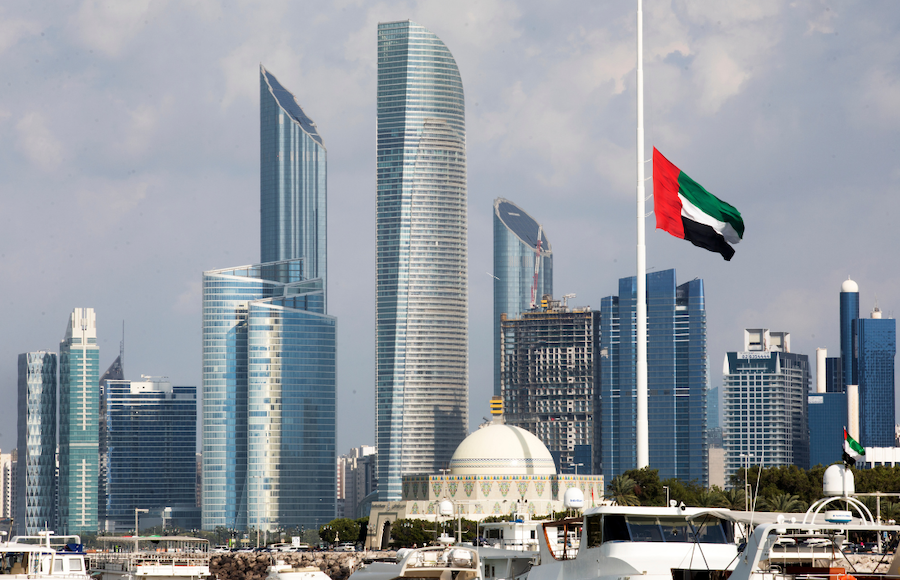
Entry to building materials into constructin market of the UAE demand size sales channels
The analysis focused on which types of projects consistently generate façade demand, and where that demand is actually accessible.While high-level indicators from sources such as Statista confirm sustained construction activity in the UAE, they do not reflect how demand for façade and glazing solutions is distributed across project types or decision-makers.
While precise demand for façade and glazing systems is not reported separately, broader indicators give a clear direction. Based on recent project pipeline estimates (2023–2024), the UAE construction market represents over USD 100 billion in active developments, with a significant share concentrated in high-rise residential and mixed-use projects where façade systems are a core cost component. In practical terms, glazing and façade packages can account for 10–20% of building envelope costs, depending on design complexity.
Demand is also geographically concentrated. Dubai continues to drive a large portion of high-rise and developer-led projects, particularly in residential and hospitality segments, where façade design plays a significant role in positioning. Abu Dhabi, on the other hand, tends to reflect a more institutional pipeline — including government-backed developments, infrastructure-linked projects, and large-scale mixed-use zones. The difference is not only in volume, but in how specifications are defined and approved, which directly affects how suppliers approach each market.
Not all construction or building activities creates opportunity. High-rise developments behave very differently from low-rise or industrial projects — both in volume and in how decisions are made. The question wasn’t “how big is the market”. It was “where can you realistically enter first”.
Competitive Landscape and Pricing in the UAE Glass Market
Competition was assessed locally, not globally. The question was not who produces similar systems internationally, but who is active within UAE projects today, and how they are positioned.
Pricing analysis confirmed that there is no single “market price”. Instead, pricing varies depending on project scale, contractor structure, and system complexity. In some segments, price sensitivity is driven less by end-user value and more by contractor margins and tender constraints.
In practice, price variations of 15–25% between comparable projects are not unusual, driven less by product differences and more by contractor structure, specification flexibility, and delivery constraints.
Distribution Channels and Go-to-Market Strategy
The go-to-market strategy was built around access.
Three main pathways were evaluated:
- direct engagement with developers,
- partnerships with façade contractors,
- and distributor-led entry.
In practice, a phased approach proved more viable.
In one case, early projects were secured through contractor relationships, while longer-term positioning was built through consultant engagement. In several comparable entries, time to first secured project ranged between 6 and 12 months, depending on how quickly the supplier aligned with contractor-led execution models.
Selected Observations from the UAE Façade and Glazing Market
A few patterns emerged consistently:
– Specification influence tends to happen earlier than expected.
– Contractors often shape final decisions more than initially assumed.
– Pricing rarely follows a standard logic across projects.
– Access alone is not enough without alignment to how projects are delivered.
Outcome and Market Entry Strategy
The result was a defined entry model grounded in how the UAE construction sector operates. The client gained clarity on which segments to prioritise, how to position pricing, which channels to activate first, and how to sequence market entry.
In practical terms, this avoided a broad, trial-driven approach and replaced it with a controlled entry strategy.
When Companies Require Market Entry Research in the UAE Construction Sector
Market entry research for UAE construction market typically becomes relevant at specific points.
1. Before entering the market for the first time.
2. When early efforts fail to convert into projects.
3. When pricing appears competitive but is not accepted.
4. When selecting local partners or contractors.
| Situation | Typical Outcome Without Validation | Impact of Structured Market Research |
|---|---|---|
| Entering UAE façade market for the first time | Strong interest but no secured projects | Clear target segments and realistic entry path |
| Competitive pricing not converting | Repeated loss in tenders or contractor negotiations | Pricing aligned with project and contractor structures |
| Working with distributors or contractors | Limited pipeline activation despite partnerships | Selection of partners with real project access |
| High demand but low traction | Misalignment between product and specification process | Identification of real barriers to project inclusion |
In many cases, the signal is simple: there is visible demand, but no traction.
From Market Research to Execution
The value of this work lies in how it informs decisions. It provides direction on where to focus, how to approach pricing, and which relationships to prioritise. In several projects, this has led to refining the entry strategy before committing resources — avoiding significantly larger costs later.
Conclusion
The UAE remains a strong market for glass and glazing solutions. The demand is there, and the pipeline supports it. What determines success is not access to that demand, but alignment with how the market functions.
Without that alignment, market entry becomes reactive. With it, the process becomes controlled.
Talk to Us
If you are evaluating entry into the UAE construction market or planning to introduce glass and glazing solutions, we can help you assess the opportunity and structure a practical market entry strategy.
You can contact us directly via WhatsApp or call us in the UAE at +971 50 599 5603.
If you prefer to start with a structured request, you can submit your project brief at this LINK — and we will respond with a tailored proposal within 24–48 hours.
We support companies across the UAE and the wider GCC with market research, feasibility studies, and market entry strategy — focused on how markets actually work, not how they appear.


