
Last updated: 26 October 2026
A survey is useful when you need structured evidence from a defined group of customers, consumers or business decision-makers. It is much less useful when the audience is too specialised, the questions require explanation, or the real issue is understanding why people behave the way they do.
That distinction matters. Many businesses approach survey research with a questionnaire already in mind, when the more important question is whether a survey is actually the right method for the decision they need to make.
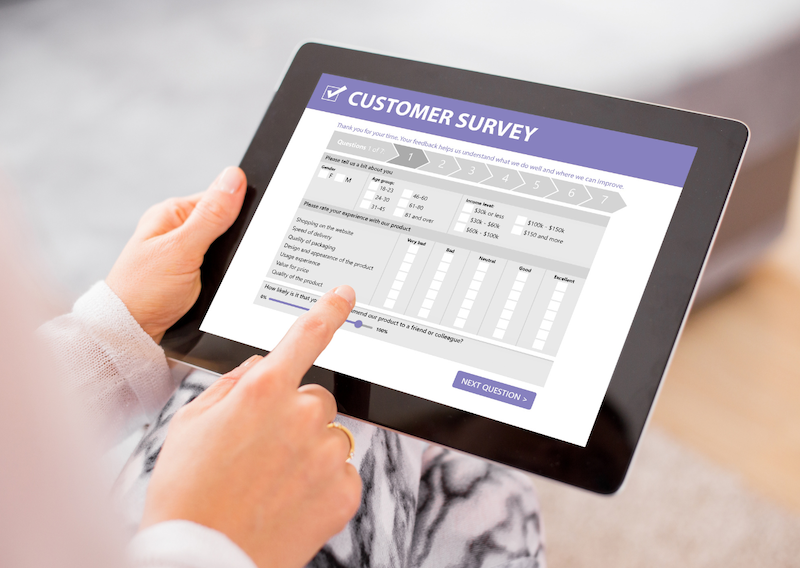
Customer Online Surveys in the UAE Service
At Accurate Middle East, we use survey research in the UAE as part of wider customer, consumer and market research assignments. Depending on the project, a survey may be the principal source of evidence or one component combined with interviews, focus groups, competitor research and secondary analysis. The method is selected around the business question rather than the other way around.
A well-designed survey can tell management how common a behaviour is, which customer segments respond differently, what people are currently buying, what they value, how price affects consideration, and whether an opportunity identified qualitatively is large enough to matter commercially.
A poorly designed survey produces percentages that look precise but answer very little.
What Survey Research Can Answer
The strongest market research surveys in the UAE start with a management decision. A company may need to decide whether to launch a product, change a service, enter a new customer segment, adjust pricing or understand why one group of customers behaves differently from another.
For a consumer brand, the questions may concern awareness, purchase frequency, preferred channels, packaging, switching behaviour or willingness to try something new. For an existing service business, a customer survey may examine satisfaction, reasons for choosing the company, expectations, retention risks or service gaps. For a B2B company, the survey may test purchasing criteria, supplier preferences or attitudes across a larger group of decision-makers.
Typical survey questions therefore sit much closer to commercial decisions than to general opinion polling. We may be trying to understand:
- who currently buys or uses the product;
- how often they purchase and where;
- what criteria influence the decision;
- which competing brands or services they use;
- what they consider expensive, acceptable or good value;
- what would make them switch;
- which customer groups respond differently enough to require separate strategies.
The point is not to collect as many answers as possible. It is to collect the right answers from the right respondents and turn them into something management can use.
Online vs In-Person Surveys in the UAE
Online survey research is efficient when respondents can be reached digitally, the questionnaire is reasonably structured and the topic does not require extensive explanation. It can also make geographic coverage easier when respondents are distributed across Dubai, Abu Dhabi, Sharjah and other Emirates.
In-person research still has a role. Some projects involve customer groups that are easier to access in physical locations, require assisted completion, or need evidence tied to a particular retail environment, venue or service experience. Telephone surveys can also be appropriate when respondent screening is important or the target population is difficult to reach through consumer panels.
| Method | Best Used When | Main Advantage | Potential Limitation |
|---|---|---|---|
| Online survey | Consumers or customers can be reached digitally and questions are structured | Efficient coverage and quantitative comparison | Less suitable for complex questions requiring probing |
| In-person survey | Location, physical experience or assisted participation matters | Direct access to respondents in a relevant environment | More fieldwork-intensive |
| Telephone survey | Respondents require screening or are difficult to reach online | Researcher can verify eligibility and clarify questions | Long questionnaires can reduce respondent engagement |
| Qualitative interview | The objective is to understand motivations, reasoning or complex decisions | Depth and ability to probe | Not designed to quantify prevalence across a large population |
For many UAE projects, the best answer is not choosing one method exclusively. We may first use interviews or focus groups to understand the language, motivations and issues that matter, and then design a quantitative survey to measure how widely those patterns occur.
How We Design a Survey
A good market research questionnaire in the UAE is not simply a list of questions the client wants answered.
Questionnaire design starts by translating the commercial objective into measurable variables. If the client wants to know whether customers will switch brands, for example, asking “Would you buy our product?” is usually too weak. We need to understand what they buy now, why they buy it, what they value, what frustrates them, how sensitive they are to price and what would actually trigger a change.
Questionnaire Design

Survey Research in the UAE
The questionnaire needs to be short enough to maintain attention but detailed enough to support analysis. The order of questions matters. So does the wording. Leading questions, vague price questions and forced answers can distort results long before the data reaches Excel.
We normally separate screening questions from behavioural questions, attitudes, concept evaluation and respondent classification. Where necessary, routing is used so respondents only see questions relevant to them.
For bilingual UAE studies, Arabic and English versions should also mean the same thing commercially, not merely translate word for word.
Sampling and Respondent Recruitment
The quality of any quantitative consumer study depends heavily on who actually answers the questionnaire.
A sample of 500 respondents is not automatically better than a sample of 200 if the larger group does not match the target customer. For a premium product, relevant household income, purchasing responsibility and actual category usage may matter more than raw respondent volume. For a B2B project, job function and involvement in purchasing decisions can be more important than company size alone.
We therefore define respondent eligibility before fieldwork starts. Demographic variables such as age, nationality, household profile, income and location can also be important when analysing how different customer groups behave. For a broader explanation of how these factors are used in commercial research, see our Customer Demographic Analysis UAE page.
For population structure and demographic context, official UAE statistics can be used as a reference point when designing samples and interpreting respondent profiles. See the Federal Competitiveness and Statistics Centre.
Sample design should reflect the decision the survey is intended to support, not simply what is easiest to recruit.
Fieldwork and Quality Control
Quantitative research can become unreliable very quickly when fieldwork is treated as a volume exercise.
Quality checks may include screening validation, duplicate-response checks, completion-time review, inconsistent answer patterns, attention checks and manual review of suspicious responses. In more specialised studies, respondent profiles may also require additional verification.
We would rather reject a questionable response than allow it to influence a commercial recommendation.
Survey fieldwork should also be designed with respondent privacy and data handling in mind. In the UAE, personal data processing is governed by Federal Decree-Law No. 45 of 2021 on the Protection of Personal Data. You can review the official legislation on the UAE Legislation platform.
Data Cleaning and Analysis
The survey is not finished when the last respondent clicks “submit”.
Raw data has to be checked, cleaned and analysed against the original business questions. The useful part often comes from comparing groups: existing customers against non-customers, younger against older users, Dubai against Abu Dhabi, frequent buyers against occasional buyers, or customers with high willingness to pay against those driven mainly by price.
Percentages without interpretation rarely change a decision. The analysis needs to explain what those differences mean commercially.
Consumer Surveys Across UAE
Consumer surveys are particularly useful when a company needs to move beyond assumptions about who buys, why they buy and what they might do next.
The UAE is a diverse consumer market. Nationality, household structure, income, lifestyle, location and cultural background can influence category behaviour, but demographic differences alone are rarely sufficient. Two consumers of similar age and income can have completely different purchase frequency, brand loyalty and willingness to pay.
That is why behavioural questions usually matter more than demographic profiling by itself.
Consumer surveys may support product launches, brand positioning, packaging decisions, pricing, concept testing, channel strategy and market-entry decisions. They also work particularly well when qualitative research has already identified several possible explanations and the client now needs to know which of them matter at scale.
For broader work on needs, buying behaviour, customer segments and decision criteria, see our Customer Research UAE service.
Customer Surveys: Understanding Existing Customers, Not Just the Market
A customer survey asks a different question from a general market survey.
Instead of trying to understand everyone who could potentially buy, it focuses on people who already have a relationship with the business. That allows the research to examine the experience in much greater detail: why customers chose the company, what they value, where expectations are not being met and what may affect repeat purchase or retention.
Structured customer feedback can be used by service businesses, clinics, professional firms, retailers, hospitality operators and B2B organisations.
A useful customer survey can investigate the entire relationship: acquisition source, decision criteria, experience, perceived value, likelihood of return, unmet needs and reasons for considering competitors.
For projects focused specifically on satisfaction, CSAT, NPS or service experience, our dedicated Customer Satisfaction Analysis UAE page covers that methodology in more detail.
B2B Surveys Require a Different Approach
B2B survey research is possible, but it is not consumer research with different job titles.
The respondent pool is smaller, screening is more demanding and the relevant person may be a procurement manager, technical specialist, business owner, operations director or other stakeholder involved in a buying decision. In some markets, the number of genuinely qualified respondents may be limited enough that interviews are a better method.
Where a quantitative B2B survey is justified, the questionnaire needs to reflect how organisations actually purchase. Supplier selection, technical requirements, tendering, payment terms, service levels, compliance and existing relationships can all matter more than consumer-style brand awareness.
For specialised markets where depth matters more than sample size, we may recommend B2B market research or direct interviews instead.
When a Survey Is Not the Best Research Method
There is a temptation to use surveys because they produce numbers. Numbers feel definitive. But some questions should not begin with a questionnaire.
If a company is trying to understand why a procurement director rejected a supplier, why patients hesitate before choosing a treatment, or why distributors refuse to carry a new product, a structured survey may flatten the very detail the client needs.
In those situations, interviews or focus groups usually come first.
We may also advise against a survey when the target group is extremely narrow, respondent recruitment would be unreliable, or the client is trying to test a concept that respondents cannot reasonably evaluate without seeing, using or discussing it.
This is one reason Accurate Middle East does not position itself simply as a survey company in the UAE. Surveys are one research tool within a broader methodology. Our role is to recommend the method that produces the strongest evidence for the decision.
Depending on the question, that may mean focus groups in the UAE, interviews, mystery shopping, observation or another form of primary research.
What You Receive From a Survey Research Project
Deliverables depend on the scope. Some clients need clean data for their own analytics team. Others need interpretation, recommendations and a management presentation.
A typical project may include the questionnaire, respondent definition and sampling framework, programmed survey, cleaned dataset, analytical tables or charts, cross-tabulation of relevant customer groups and a report explaining the findings. Where the survey sits inside a wider market study, those results are integrated with competitor research, secondary data and qualitative evidence rather than reported in isolation.
The final output should make it possible to trace an important recommendation back to the evidence supporting it.
Case: Consumer Survey for a Premium FMCG Brand in the UAE
One of our UAE projects involved the development and market entry of Safie, a new premium facial tissue brand targeting mid- to higher-income households and selected B2B customers.
The category was already crowded. Established regional and international brands were widely available, so simply confirming that UAE consumers buy facial tissues would have added almost no value. The client needed to understand whether there was room for a new brand, what customers actually cared about and what could persuade them to switch.

Our work combined market and competitor research with primary consumer research, including a survey examining usage behaviour, brand preferences, purchase criteria, price perceptions and switching behaviour. The research also looked for pain points and unmet needs across different consumer groups.
The survey findings were not treated as a standalone presentation. They were used alongside the broader market evidence to refine the brand’s accessible-premium positioning, pricing approach, visual identity and packaging. The resulting strategy then informed the go-to-market plan and early distributor and wholesale outreach.
This is the type of survey project we consider commercially useful: the questionnaire was not the end product. It was one source of evidence used to make decisions about the actual business.
You can read the full case at this link.
Survey Research Cost in the UAE
The cost of a survey project depends primarily on the respondent profile, sample size, questionnaire length, recruitment difficulty, number of languages and depth of analysis required.
A straightforward consumer survey with broadly available respondents is fundamentally different from a study requiring 150 verified decision-makers in a narrow B2B segment. Likewise, providing a cleaned dataset is different from conducting the survey as part of a full customer research or market-entry assignment.
For that reason, we normally price survey projects after defining the target respondents and the business decision the research must support. If a company approaches us with a questionnaire already prepared, we can review whether the questions, sample and methodology are sufficient before fieldwork begins.
Survey Research as Part of a Larger Market Study
Not every project needs a survey. But when the business decision depends on measuring customer behaviour across a sufficiently large audience, quantitative research can add something that interviews and desk research cannot provide.
The strongest studies tend to combine methods deliberately. Qualitative research explains. Surveys measure. Competitor research provides market context. Secondary data establishes the wider environment. Together, those sources are much more useful than any one method applied mechanically.
For projects requiring a wider assessment of demand, customers, competitors and commercial opportunity, see our Market Research Services or Primary Research UAE pages.
Discuss a Survey Research Project in the UAE
If you need a consumer survey, customer survey or quantitative market study in the UAE, we can help define the sample, questionnaire and methodology around the business decision you are trying to make.
Talk to our 24/7 AI assistant on WhatsApp and receive a tailored proposal within 24–48 hours.
You can also email us at team@meaccurate.com or call us in the UAE on +971 50 559 5603.Alternatively, you can request a callback or a free consultation by clicking the button below or filling in the brief for market research for our our specialists to check it and come back to you with possible solutions.
Frequently Asked Questions
Survey research in the UAE is a quantitative research method used to collect structured data from consumers, customers or business decision-makers. It can measure purchase behaviour, brand awareness, satisfaction, price sensitivity, switching behaviour, service preferences and market demand. Surveys are particularly useful when a company needs to understand how common a behaviour or opinion is across a defined target group rather than relying only on interviews or anecdotal feedback.
Survey projects in the UAE can include consumer surveys, customer feedback surveys, B2B surveys, brand and concept testing, pricing research, satisfaction studies, market-entry research and product validation. Surveys may be conducted online, by telephone or in person. The method depends on how easy the target audience is to reach, how much screening is required and whether the topic can be answered through structured questions.
There is no single correct sample size. Consumer studies often use samples ranging from a few hundred respondents to 500 or more, depending on the number of customer segments, emirates or demographic groups that need to be compared. For niche or B2B research, a much smaller sample may be appropriate because relevant respondents are harder to identify and recruit. A well-screened sample of qualified respondents is usually more valuable than a larger sample that does not match the target market.
For broadly available B2C audiences, respondent recruitment in the UAE and GCC may typically start at around USD 8–15 per completed interview (CPI), depending on screening criteria, survey length and incidence rate. Specialist B2B respondents can cost significantly more — from tens of dollars to several hundred dollars per completed interview — particularly when the study requires senior decision-makers, technical professionals or niche industry participants. These figures relate to respondent recruitment and fieldwork, not the total research project fee.
Respondents are recruited against defined eligibility criteria such as emirate, age, gender, nationality group, household profile, occupation, product usage or purchasing responsibility. Accurate Middle East also has access to a panel of more than 50,000 potential research participants, which can help accelerate recruitment for suitable consumer and business studies. Quality control may include screening questions, duplicate-response checks, completion-time review, attention checks, inconsistent-pattern detection and manual review of suspicious responses. For specialised B2B studies, additional respondent verification may be required before an interview is accepted.
A survey is best when a company needs to measure patterns across a larger group. Interviews are better when the objective is to understand individual motivations, purchasing decisions or complex business issues in depth. Focus groups are useful for exploring reactions, language, perceptions and new concepts through discussion. Many strong research projects combine methods: qualitative research identifies the issues first, and a survey then measures how widely those findings apply.
A focused online survey project can often be completed in around two to four weeks, including questionnaire design, programming, fieldwork, data cleaning and analysis. Broad consumer samples are usually faster to recruit than niche B2B audiences. Projects involving Arabic and English questionnaires, difficult screening criteria, multiple Emirates or additional interviews and focus groups may require more time.


