
- Client: Private property owner
- Location: Sharjah, UAE
- Sector: Hospitality, boutique hotel
- Year: 2024
- Services: Market and competitor research, primary research, feasibility study, financial model, investor pitch deck
The Challenge
The client owned an old three-storey building in a part of Sharjah that was changing fast, a short distance from a university. For some time the building had been sitting mostly empty. He could sell it, hold on and wait, or put money into it, and he came to us leaning towards the third option.
His reasoning went like this: the area was growing, students were coming in from outside the emirate, and they, their families and the university staff would all need places to stay. He was probably right. But a renovation is an expensive way to test a hunch, and before committing he wanted answers to some basic questions. Who would actually stay? How much would they pay? And could a hotel in this particular building cover its costs?
What We Did
The first thing we looked at was the neighbourhood. Sharjah in 2024 was busy with new projects and infrastructure, and this area was one of the places where you could see it happening. Roads and services were nearly finished, and the plans for the district pointed towards restaurants, cafés and hospitality.
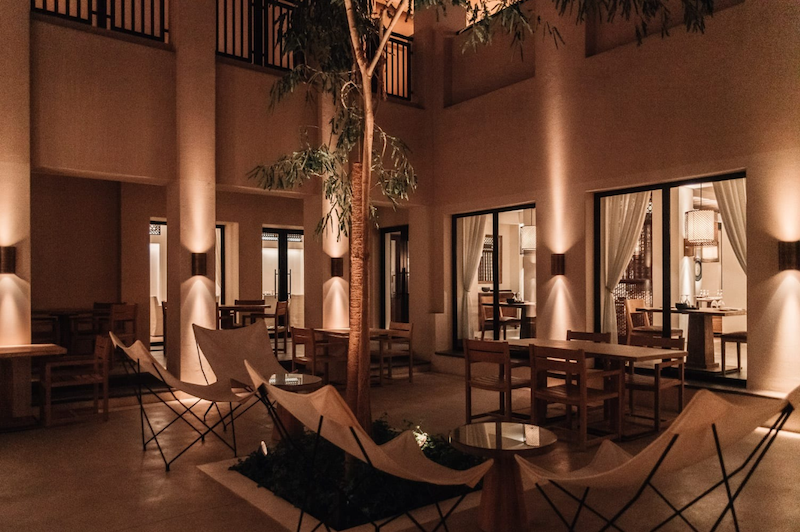
We then mapped the hotels and serviced apartments nearby: what they charged, how they were run and who they were trying to attract. This competitor analysis ran alongside conversations with the people who might one day stay in the hotel. Through primary research, we asked how often they came to the area, what they looked for in a place to stay, and at what point price would start to put them off.
Our project manager also brought in an engineering firm to draw up a conversion design for the building. That mattered more than it might sound. With an actual design on the table, the renovation budget in our numbers was based on a plan rather than a guess.
The last step was the financial model. We worked out a price corridor and margin range, the minimum number of guests the hotel would need to break even, the most it could afford to spend on running costs, and the risks that could knock it off course.
What the Research Showed
The area was moving in the direction the owner expected. Where his picture was incomplete was the guests. Students and their families were one group, but there were others: teachers and educational staff visiting the university, residents of the surrounding neighbourhoods, and people coming in for meetings at the nearby business centres.
What none of them could find locally was a small, well-run business hotel with the standard of service foreign guests expect. Luxury was never the point. Clean rooms, modern finishes and staff who get the basics right would set the hotel apart, and the new restaurants and cafés opening around it would do part of the selling.
Our conclusion was that the hotel could work, as long as three conditions held: rates stayed inside the price corridor, occupancy stayed above the break-even level, and operating costs stayed under the ceiling in the model.
What Other Owners Can Take From This
Three things from this project apply to almost any building or plot being considered for a hotel.
Find out who the guests really are before designing anything. The owner had the right idea about the area but too narrow an idea of who would stay. Had the hotel been built around students alone, it would have been designed, priced and marketed for a fraction of its real market.
Put a real design behind the budget. Renovation costs estimated from square metres and rules of thumb are often wrong by a wide margin. A conversion design from engineers turns the biggest unknown into a number you can model.
Agree the conditions before you raise money. “Feasible” is never unconditional. Knowing the price corridor, the break-even occupancy and the cost ceiling up front gave the owner clear answers to the questions any investor would ask, and made the pitch far easier to defend.
The Result of Service
We recommended converting the building into a boutique hotel rather than selling it or leaving it empty, and helped the owner shape that decision.
The renovation and the launch marketing still had to be paid for. Using the findings of the study, we put together the investor pitch deck and financial proposal, and an investor came in for a 30% equity stake in the project.
Looking Back From 2026
We did this work in 2024, when hotel demand across the UAE was rising quickly. A study done today would include one more scenario, testing what happens to the numbers during a regional disruption like the one the market went through this year, which we cover in our analysis of the UAE hospitality market in 2026. That test is now standard in every hotel feasibility study we prepare.
Have a Building or Site You Are Unsure About?
Tell us where it is and which options you are considering. We will tell you how we would test them.
WhatsApp: Message our team
Email: team@meaccurate.com


