
A strategic guide for companies planning market entry, investment, or expansion in the Kingdom
Saudi Arabia has rapidly become one of the most important investment destinations in the Middle East. Over the past decade, the Kingdom has undergone a noticeable economic transformation, driven by Vision 2030, ambitious infrastructure projects, and regulatory changes aimed at attracting regional and global investment. As a result, new market segments are emerging, private investment is expanding, and international companies increasingly view Saudi Arabia as a strategic development market rather than simply a regional presence.
At the same time, entering the Saudi market calls for careful preparation. Many entrepreneurs and corporate investors underestimate the complexity of the commercial environment. Market demand, competitive structures, regulatory requirements, and capital investment levels can differ significantly from what companies experience in other markets.
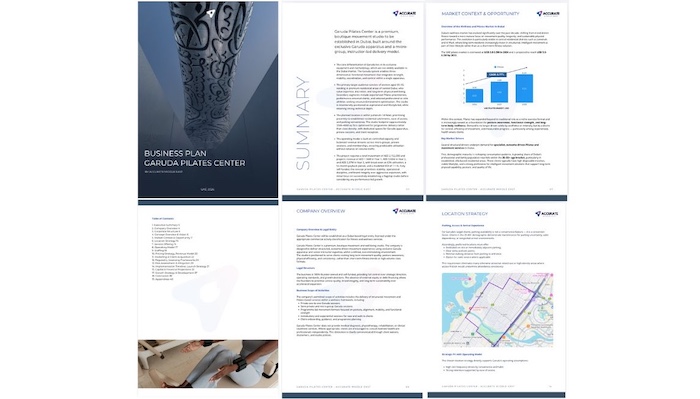
Investor-Ready Business Plans for Saudi Projects
This is why a professionally developed business plan fulfills a crucial role in evaluating opportunities in Saudi Arabia. An organized business plan is not simply a document describing an idea. It is an analytical approach that helps investors evaluate whether a project is viable, what resources are required, and how the business should position itself within the Saudi market.
Companies considering market entry often need answers to several fundamental questions. How large is the addressable market? Who are the existing competitors? What licensing requirements must be addressed? How much capital is required to reach operational steadiness? And most importantly, what level of financial return can realistically be expected from the investment?
This article explains how business plan development in Saudi Arabia works from a consulting perspective, when companies typically require it, and how it fits with wider services such as market research, feasibility studies, and financial modeling. For business owners and investors considering opportunities in the Kingdom, understanding this process may greatly improve the quality of strategic decisions.
Business Plan Development Services in Saudi Arabia
In professional consulting practice, business plan development is a structured, analytical process that translates a commercial idea into a fully evaluated investment concept. The objective is to identify whether the proposed business model is realistic within the Saudi market environment and to define the operational and financial framework required to launch or expand the project.
Market Analysis
One of the most important components of a business plan is market analysis. Saudi Arabia is a large and diverse economy, with demand patterns that vary across industries and regions. Market research typically examines sector size, historical growth patterns, pricing schemes, and consumption trends. In many industries, consultants also conduct interviews with industry participants to better understand how the market actually functions beyond publicly available data.
Competitive Landscape
Equally important is a detailed understanding of the competitive landscape. Investors often enter a market believing there is restricted competition, only to discover that local players already dominate key distribution channels or customer segments. A well-prepared business plan analyzes how existing companies position themselves, price their services, and differentiate their offerings.
Regulatory and Licensing Environment

Business Plan Development Services in Saudi Arabia
Another dimension that cannot be ignored in Saudi Arabia is regulation. The country has introduced a number of reforms in recent years to attract foreign investment, particularly through the Saudi Ministry of Investment (MISA), which regulates and facilitates international business entry into the Kingdom. And at the same time, licensing procedures, Saudization, and industry-specific regulations still play a decisive part in determining how businesses operate. A business plan therefore needs to assess whether the proposed business model complies with the regulatory environment and what steps are required to obtain the necessary approvals on time to operate more easily.
Operational Planning
Operational planning is also a central part of the process. This involves determining how the company will operate in practice—how the supply chain will be organized, how staffing requirements will evolve, and which partnerships may be needed to enter the market efficiently.
Financial Modeling
Finally, all of these planned elements must be translated into a financial model. Investors rely on financial projections to evaluate a project’s viability, assess expected returns, and determine when the business will reach profitability.
When Companies Need a Business Plan in Saudi Arabia
Although business plans are commonly associated with startups, they are equally relevant for established companies considering expansion into Saudi Arabia. In many cases, business planning becomes essential when companies reach a point where strategic decisions entail considerable capital commitments.
Foreign investors exploring entry into the Saudi market often require a business plan to evaluate whether the opportunity justifies the investment. While the Kingdom offers strong growth prospects within sectors ranging from healthcare to hospitality, success depends heavily on understanding the competitive landscape and regulatory environment.
Entrepreneurs launching new businesses in Saudi Arabia also benefit from a structured business plan. Beyond communication with investors or lenders, the process forces founders to validate their assumptions about market demand, pricing, and operating costs. In practice, many early-stage companies improve their business models substantially during the planning phase.
Established companies frequently use business planning when expanding into new sectors or geographic regions within the Kingdom. For example, a healthcare provider considering launching a specialized clinic may need to evaluate patient demand, licensing requirements, and capital investment before proceeding with the project.
Business Plan for Market Entry into Saudi Arabia
Companies entering Saudi Arabia from international markets face additional challenges that must be reflected in their business plans. The Kingdom’s commercial environment is evolving quickly, but local knowledge still plays a key role in navigating both regulatory requirements and competitive dynamics.
One important consideration is regional variety within the Saudi economy. Demand patterns and industry structures can vary between major economic centers such as Riyadh, Jeddah, and the Eastern Province. While the Saudi market is often discussed at the national level, successful market entry strategies frequently require more granular regional analysis.
Another factor is the potential role of local partners. In certain sectors, collaboration with Saudi distributors, franchise partners, or joint venture investors can greatly accelerate market entry. Business plans often examine different partnership structures and evaluate how they influence operating expenses and market access.
Customer preferences and cultural dynamics also shape market strategies. Products or services that perform well in other markets may need to be adapted to meet local expectations. Market research therefore becomes essential when defining positioning, pricing policies, and distribution models.
Financial Model and Market Assumptions
A credible business plan ultimately depends on the strength of the company’s financial assumptions. Financial modeling translates strategic knowledge into quantifiable projections that investors can evaluate.
Revenue projections must be grounded in realistic expectations regarding market size, achievable market share, and pricing benchmarks. Overly optimistic forecasts are one of the most common weaknesses in poorly prepared business plans.
Operating expenses must also be evaluated carefully. Labor expenses, facility costs, logistics, marketing budgets, and regulatory fees can vary considerably across industries in Saudi Arabia. Understanding these variables is critical when estimating how long it will take for the business to reach break-even.
Capital investment requirements are another key element of the financial model. In sectors such as manufacturing, healthcare, or hospitality, the initial capital outlay can be substantial. Investors therefore need a clear picture of how funds will be allocated and how quickly the investment can generate returns.
Financial models typically include indicators such as internal rate of return, net present value, and payback period. These metrics help investors evaluate whether the opportunity meets their financial objectives.
Feasibility Analysis and Market Validation
While business plans define strategic direction, feasibility studies assess whether the proposed project is commercially viable. In many consulting engagements, feasibility analysis is conducted before or alongside the business planning process.
Feasibility studies examine whether there is sufficient demand to support the proposed business model and whether operational and financial assumptions are realistic. For example, a feasibility study for a hospitality project might evaluate tourism flows, occupancy benchmarks, and operating costs to determine whether the investment is justified.
This analytical approach ensures that investment decisions are based on objective data rather than assumptions.
Investor-Ready Business Plans for Saudi Projects

Business Plan for Market Entry into Saudi Arabia
Investors reviewing business plans typically expect a level of analytical thoroughness that goes far beyond a conceptual overview. A professionally developed business plan must demonstrate that the opportunity has been evaluated using rigorous market research and financial analysis.
Investor-ready business plans usually incorporate independent market data, competitive benchmarking, demand projections, and detailed financial modeling. Risk assessment also plays an important role, particularly in markets where regulatory changes or competitive pressures may influence long-term profitability.
For international investors evaluating opportunities in Saudi Arabia, the credibility of the analysis can greatly affect whether the project moves forward.
Average Cost of Business Plan Development in Saudi Arabia
The cost of preparing a professional business plan in Saudi Arabia varies depending on the complexity of the project, the level of market research required, and whether the plan includes detailed financial modeling or feasibility analysis. For simple startup concepts, pricing may remain relatively moderate, while investment projects or market entry strategies typically require deeper analytical work and therefore higher consulting fees.
Average Cost of Business Plan Development in Saudi Arabia
The cost of preparing a professional business plan in Saudi Arabia varies depending on the complexity of the project, the level of market research required, and whether the plan includes detailed financial modeling or feasibility analysis. For simple startup concepts, pricing may remain relatively moderate, while investment projects or market entry strategies typically require deeper analytical work and therefore higher consulting fees.
Below is an indicative overview of typical consulting ranges in the Saudi market.
| Type of Business Plan | Typical Consulting Cost (Saudi Arabia) |
|---|---|
| Startup business plan (basic concept validation) | USD 4,000 – 8,000 |
| Investor-ready business plan with financial model | USD 6,000 – 12,000 |
| Market entry business plan for Saudi Arabia | USD 10,000 – 18,000 |
| Business plan with feasibility study and market research | USD 15,000 – 35,000 |
These ranges reflect typical consulting pricing for professional advisory firms working on investment planning, market entry strategy, and feasibility analysis in Saudi Arabia. The final cost of a project usually depends on the scope of research, the complexity of the sector, and the level of financial modeling required.
Business Plan Consulting Process
Consulting firms specializing in market entry and investment strategy generally follow a well-structured methodology when developing business plans.
The process typically begins with a strategic discussion to clarify the client’s objectives and define the scope of the analysis. Consultants then carry out market research to understand industry dynamics and evaluate the competitive landscape.
Financial analysts subsequently develop a detailed financial model based on the market and operational assumptions identified during the research phase. The final business plan integrates these findings into a coherent strategy, outlining the investment case and highlighting potential risks.
This organized method transforms the business plan into a decision-making tool rather than a theoretical document.
Discuss Your Market Entry with Us
Saudi Arabia represents one of the most dynamic investment environments in the Middle East. The scale of economic transformation underway in the Kingdom continues to create opportunities across multiple industries. However, successful market entry requires a clear understanding of the commercial landscape, the regulatory framework, and the financial consequences of the investment.
A well-developed business plan, backed by thorough market research and feasibility analysis, provides investors with the clarity needed to evaluate opportunities objectively. For companies entering the Saudi market, professional business planning often serves as the foundation for effective expansion strategies.
Speak With Our Consulting Team
If you are evaluating investment opportunities in Saudi Arabia and require professional support with business plan development, market research, or feasibility studies, our team at Accurate Middle East would be pleased to assist.
We work with entrepreneurs, investors, and corporate strategy teams to develop data-driven business plans customized specifically to the Saudi market, combining commercial analysis, competitive insights, regulatory expertise, and financial modeling.
To discuss your project directly with one of our consultants, you can reach us on WhatsApp at this LINK.
You may also call our UAE office at +971 50 599 5603.
If you prefer, request a consultation through our website or complete our short project brief HERE.
Once we receive your brief, our team will examine the details and provide a customized proposal within 24-48 hours. We look forward to assisting your expansion into Saudi Arabia and the wider GCC region.
 | |
Author: | |
| Dr. Elena Zhukovskaya Senior Consultant, Partner | |
| 20+ years of experience in market research, business management, investor relations, and brand communications across the UAE, KSA, and GCC. Author of 50+ publications and a regular speaker at leading business events in the region. Linkedin profile |

Market Research in Saudi Arabia
Before developing a business plan or evaluating a feasibility study, investors typically begin with a clear understanding of the market itself. Market research in Saudi Arabia helps companies assess demand, identify competitors, understand pricing dynamics, and evaluate how customers behave across different regions of the Kingdom. For businesses considering market entry, this step often becomes the foundation of strategic decision-making. A detailed market study can reveal whether an opportunity is truly scalable, which segments are underserved, and how new entrants can position themselves effectively. If you are exploring expansion into the Saudi market, you may find it useful to read our detailed guide on market research in Saudi Arabia, where we explain how companies evaluate sectors before committing investment.


