
ESG Reporting Services in the UAE and KSA in 2026
Investor-Grade ESG Reporting Built for Regulation, Capital Markets, and Real Scrutiny
Over the past year, ESG reporting in the UAE and Saudi Arabia has quietly but decisively changed. This is something we see first-hand in discussions with boards, CFOs, and investment teams across both markets. What was once treated as a disclosure exercise is now reviewed far more critically — often by people who are not sustainability specialists at all.
From a practical perspective, this forms the core of our ESG report preparation services, ensuring that reporting is grounded in real data and internal ownership.
Banks ask detailed questions, and investors compare ESG reports line by line. Procurement teams look for consistency across documents. Regulators expect structure and traceability. In practice, companies are increasingly expected to align their ESG disclosure with a recognised ESG reporting framework in the UAE, rather than relying on internally defined formats.
Many companies come to us with the same concern: they already have ESG disclosures in place, but they are not confident they would hold up if someone examined them closely. In most cases, that concern is justified.
This article explains how ESG reporting services in the UAE and KSA work today, what has changed in 2025–2026, and why ESG reporting now requires more than good intentions or well-designed documents. It is written to support ESG strategy and for decision-makers who prefer accuracy and clarity over comfortable assumptions.
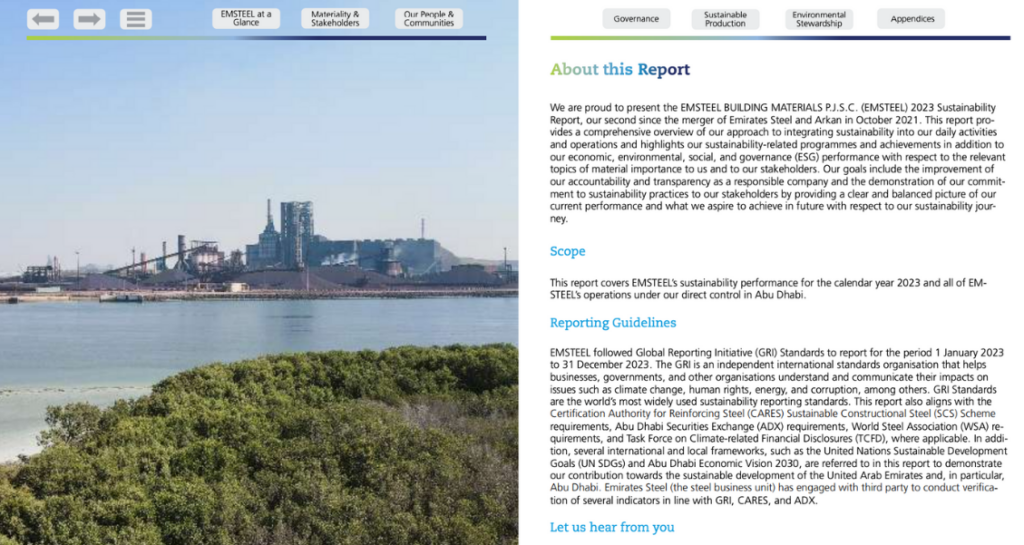
Sustainability Reporting and Disclosure in UAE
ESG Reporting in Saudi Arabia and GCC (2025–2026): Regulatory Direction and Market Expectations
Across the GCC, ESG reporting in 2025 has shifted from being encouraged to being expected in 2026. This did not happen in one day- it took a lot of time to become a reality: expectations of stakeholders tightened gradually — through climate legislation, capital-market guidance, financing requirements, and investor behaviour.
In recent years, ESG and sustainability regulations have become more explicit in the GCC region. Capital markets now expect structured ESG disclosure, more transparency and details. Sustainable and sustainability-linked financing brings ongoing reporting obligations and companies business strategies and goals. ESG requirements no longer stay at the management level, they are getting to every department and small team. ESG reports are reviewed before transactions, not after them. Better to prepare them well before it’s too late.
UAE ESG reporting requirements and services (2025–2026)
Climate legislation and emissions reporting
In the UAE, ESG reporting expectations changed materially following the introduction of federal climate legislation. Companies above defined emissions thresholds are now expected to measure, monitor, and report greenhouse gas emissions, supported by internal monitoring, reporting, and verification processes.
For ESG reporting in the UAE, this has immediate implications. Environmental data must be consistent and traceable, connected to the best and proper frameworks. Emissions figures cannot rely solely on estimates and cannot be taken from Europe or USA. ESG reports are expected to reflect how climate data is governed internally, not just represent silly numbers.
This shift has effectively positioned ESG compliance reporting in the UAE as a regulatory and governance requirement rather than a voluntary sustainability exercise.
ESG disclosure and capital-market expectations
At the same time, ESG disclosure expectations for listed and listing-ready companies in the UAE have matured. Guidance issued through capital-market institutions increasingly emphasizes materiality, board oversight, and quantitative indicators.
Even where ESG disclosure frameworks are formally described as guidance, they define what investors, lenders, and advisors consider acceptable. ESG reports that rely heavily on narrative commitments but lack data ownership or governance explanation struggle under review.
In practice, companies are increasingly expected to align their ESG disclosure with a recognised ESG reporting framework in the UAE, rather than relying on internally defined formats.
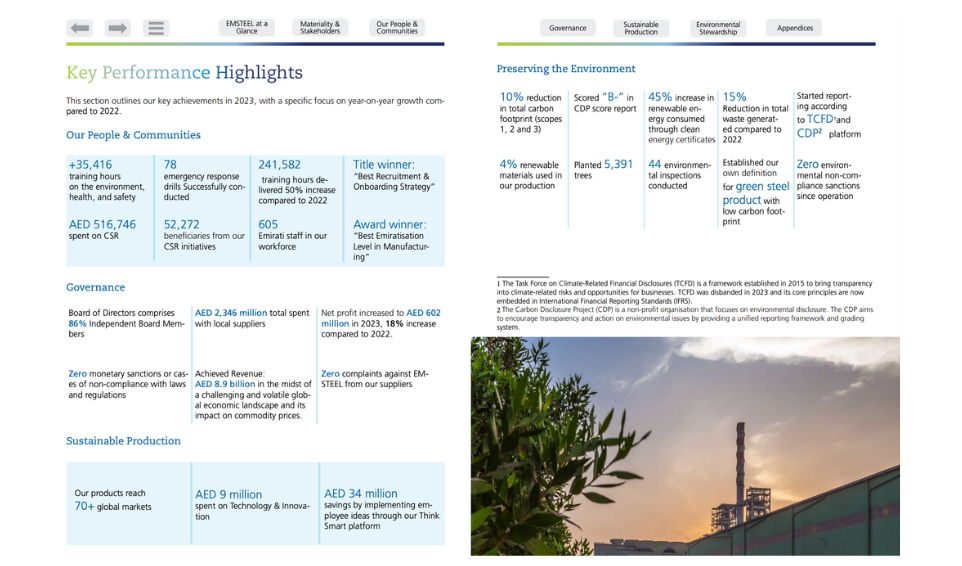
Sustainability Reporting, Disclosure in UAE
Saudi Arabia ESG reporting landscape (2025–2026)
In Saudi Arabia, ESG reporting remains largely guidance-based rather than fully mandated, but the direction is clear. The Saudi Exchange has issued ESG disclosure guidelines aligned with international frameworks, including GRI, SASB, and TCFD. These guidelines are increasingly treated as the baseline for listed companies.
In parallel, the Capital Market Authority’s guidance for green, social, sustainability, and sustainability-linked instruments has introduced ongoing reporting expectations tied to KPI performance. For companies seeking access to Saudi capital, ESG reporting is no longer optional or superficial.
Vision 2030 has also influenced how ESG reporting is evaluated. Sustainability is increasingly reviewed through the lens of governance, accountability, and execution. Investors and counterparties expect clarity on responsibility, measurement, and integration with risk management.
To clarify the practical differences, the table below summarizes how ESG reporting expectations currently differ between the UAE and Saudi Arabia.
| Area | UAE | Saudi Arabia |
| Regulatory status | Emissions reporting and sustainability disclosure increasingly regulated | ESG reporting largely guidance-based, moving toward standardization |
| Emissions reporting | Mandatory monitoring, reporting, and verification for large emitters | Not yet mandatory at national level |
| Capital-market expectations | Strong ESG disclosure expectations for listed and listing-ready companies | ESG disclosure guidelines issued by the Saudi Exchange |
| Common reporting frameworks | GRI, TCFD, increasing alignment with IFRS S1/S2 | GRI, SASB, TCFD commonly referenced |
| Sustainable finance reporting | ESG and climate metrics increasingly tied to financing | Sustainability-linked instruments require ongoing KPI reporting |
| Assurance readiness | Growing expectation, even where assurance is not mandatory | Increasing investor pressure for defensible data |
| Practical risk | ESG reports questioned during financing and regulatory reviews | ESG reports challenged during investor and transaction due diligence |
In practice, these differences matter less than they appear. In both markets, UAE and Saudi Arabia, corporate ESG reports that cannot clearly explain data ownership, governance, and decision-making logic face the same problem: they are not trusted.
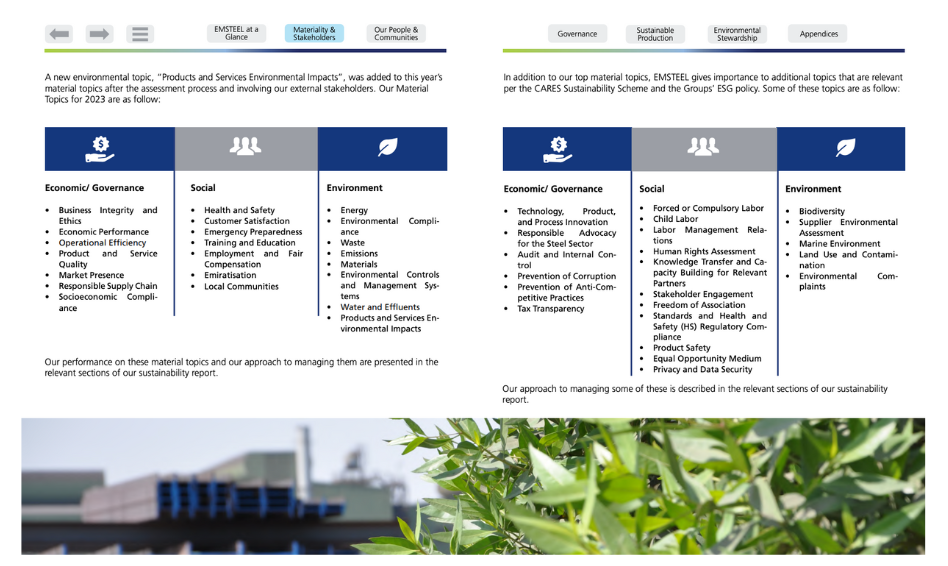
What ESG reporting actually involves
One of the most common misconceptions we encounter is that ESG reporting is primarily about writing and nice storytelling (and only used for marketing purposes). It is not. ESG reporting is about organising reality and then communicating it clearly with the main groups of your company stakeholders.
A credible ESG report answers difficult questions not only about current business situations, but reflects its future ambitions, development goals and long-term vision. What data is included, and why? At the end of the day depends on the strategy and internal clarity (maturity of the organisation and the management). Which ESG topics are truly material for the business? Look at your company goals – and you will see the priorities. How reliable is the data, and who reviews it? It’s not a matter of a sustainability officer any longer, it’s a public matter now. Where are the gaps, and how are they being addressed? And many more. When these questions are ignored, ESG reports may read well, but they fail under scrutiny.
Example: UAE-based industrial group facing refinancing review
A UAE-based industrial group approached us ahead of refinancing discussions with regional banks. The company had sustainability disclosures and internal environmental policies in place. On closer review, however, emissions data was fragmented across sites, ownership of ESG metrics was unclear, and governance responsibilities were described but not formally assigned.
Our role was not to rewrite the ESG report. It was to rebuild the structure behind it. We helped the client organise emissions data properly, clarify accountability, and adjust disclosures to reflect operational reality rather than aspiration. The final ESG report was shorter than the original, but significantly more defensible.
Example: Saudi Arabia-linked company preparing for investor review
In another case, a regional services company with growing operations in Saudi Arabia contacted us while preparing materials for potential investors. Management assumed ESG reporting would be a formality. During the assessment, it became clear that the issue was not missing data, but misplaced focus.
Several ESG topics highlighted internally were of limited relevance to investors, while governance and workforce issues required a clearer structure. We supported the company in reshaping its ESG reporting approach — fewer indicators, clearer explanations, and explicit links between ESG priorities and operational risk. The resulting report was not visually impressive, but it was clear. That distinction mattered.
ESG reporting services at Accurate Middle East
At Accurate Middle East, ESG reporting services are delivered as a structured advisory engagement, not a formatting or copywriting task. We begin by clarifying the report’s purpose — whether it is intended for regulatory alignment, investor disclosure, financing, procurement, or internal governance.
Our ESG disclosure services in the UAE and KSA are designed to support regulatory alignment, investor review, and capital-market scrutiny without overengineering the reporting process.
This approach reflects our role as an ESG reporting consultancy in the UAE, focused on substance, governance, and decision-useful disclosure rather than presentation alone.
We assess data availability, internal ownership, existing policies, and reporting history. This step often reveals gaps between expectations and reality.
We support framework selection and alignment, helping clients apply GRI, SASB, IFRS, or TCFD standards without unnecessary complexity. The objective is relevant, decision-useful disclosure. From a practical perspective, this forms the core of our ESG report preparation services, ensuring that reporting is grounded in real data and internal ownership.
We work with internal teams to structure ESG data collection across environmental, social, and governance pillars, defining metrics, responsibilities, and review processes. Where data gaps exist, we help clients address them transparently.
Before finalisation, ESG reports are reviewed as if third-party assurance were already required, with consistency with financial statements, governance disclosures, and operational reality checks.
Unlike template-driven sustainability reporting providers, our work focuses on ESG reporting that can withstand regulatory review, investor questioning, and transaction-level due diligence.
Who typically needs ESG reporting services
In practice, ESG reporting services are most relevant for listed and pre-IPO companies, companies seeking financing or refinancing, issuers of sustainability-linked instruments, industrial and asset-heavy groups, and regional businesses operating across the UAE and Saudi Arabia.
For these organisations, ESG reporting is no longer optional. It affects credibility, access to capital, and long-term positioning.
Talk to us about ESG reporting services.
If you are preparing sustainability reporting UAE KSA (Saudi Arabia), it is worth being honest about where you stand. In our experience, ESG reporting works best when treated as a management discipline rather than a communications task.
You can speak with our Ai-assistant or team representative via WhatsApp, call us in the UAE at +971 50 599 5603, or request a callback at a time that suits you. If you already have a defined scope of ESG disclosure services in GCC send it to our email team@meaccurate.com, you may complete our ESG briefing form and receive a tailored proposal within 24 hours.
We support ESG reporting across the UAE, Saudi Arabia, and the wider GCC, with a focus on accuracy, credibility, and long-term relevance.
Last Update: 12 January 2026
 | |
Author: | |
| Dr. Elena Zhukovskaya Senior Consultant, Partner | |
| 20+ years of experience in market research, business management, investor relations, and brand communications across the UAE, KSA, and GCC. Author of 50+ publications and a regular speaker at leading business events in the region. Linkedin profile |