
Last Updated: 28 March 2026
In the UAE, many companies enter the market with strong financial models, competitive products, and ambitious growth targets — yet still struggle to convert demand into actual sales. The issue is rarely the lack of opportunity, but a misreading of customer behavior, decision drivers, and trust dynamics in a highly diverse and fast-evolving market.
According to the UAE Ministry of Economy, ongoing economic diversification continues to reshape consumption patterns across sectors, making structured customer research in the UAE a critical input into market entry, pricing, and growth strategy.
At Accurate Middle East, we see this pattern repeatedly across feasibility studies, market entry projects, and investment assessments. Demand is often assumed based on population size, GDP growth, or regional hype. But demand in the Middle East does not convert automatically into adoption, pricing power, or repeat usage. Those outcomes are shaped by who the customers actually are, how they make decisions, and what they trust.
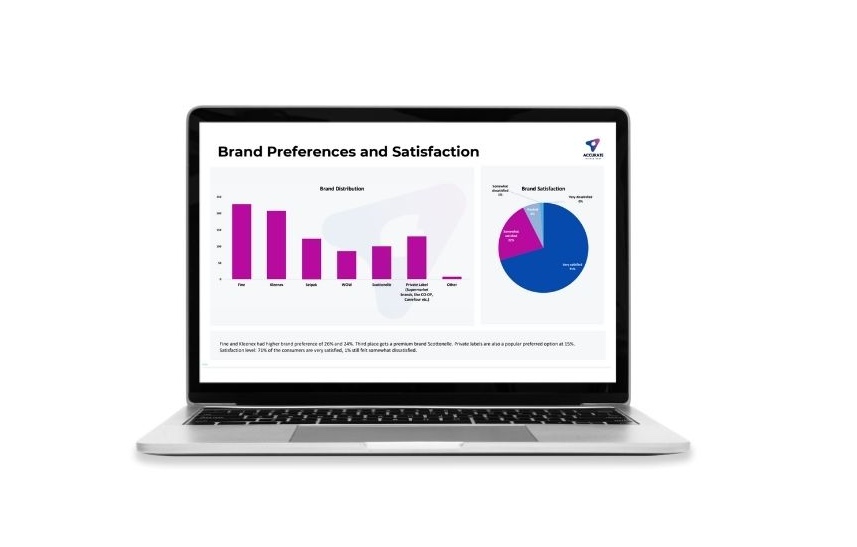
Customer Research & Behavior Analysis for UAE & Saudi Arabia
What Is Customer Research in the UAE Market?
Customer research in the UAE goes beyond collecting opinions or running standard surveys. It is a structured process of understanding how different customer segments evaluate products, build trust, compare alternatives, and ultimately make purchasing decisions within a highly diverse market.
In practice, customer research in the UAE combines quantitative data (market size, demand indicators, pricing benchmarks) with qualitative insights (behavioral drivers, perception of value, trust signals, and risk sensitivity). This combination is essential, because stated preferences often differ from actual behavior — particularly in markets where reputation, compliance, and social proof influence decision-making.
Unlike more homogeneous markets, the UAE requires a segmented approach. Customer behavior varies significantly across expatriate groups, local populations, income levels, and industry sectors. As a result, reliable customer research must reflect these differences rather than rely on aggregated assumptions.
Ultimately, customer research is not a marketing exercise — it is a strategic input into market entry, pricing, positioning, and growth planning. When done correctly, it allows businesses to move from theoretical demand to realistic, actionable insights.
1. Customer Research vs Market Research in the UAE
Customer research and market research are often used interchangeably, but in the UAE context they serve different purposes. Market research focuses on market size, trends, and competitors, while customer research goes deeper into decision-making behavior, trust factors, and purchase drivers. For businesses entering the UAE, understanding this distinction is critical, as demand alone does not guarantee adoption.
2. Why Customer Behavior Differs in the UAE
Customer behavior in the UAE is shaped by a combination of cultural diversity, income segmentation, and varying levels of brand trust. The coexistence of expatriates and local populations creates multiple parallel markets, each with its own expectations and decision logic. As a result, assumptions based on other regions often fail when applied directly to the UAE without localization.
3. Key Components of Customer Research in the UAE
Effective customer research in the UAE typically includes several layers of analysis. These include customer segmentation, decision driver analysis, pricing sensitivity assessment, and channel behavior mapping. Together, these elements provide a structured view of how demand translates into actual purchasing behavior.
4. From Data to Decision-Making
The goal of customer research is not to collect data, but to support decisions. In the UAE, this means translating insights into market entry strategies, pricing models, positioning, and channel selection. Without this step, even well-structured research remains theoretical and does not influence business outcomes.
When Do Businesses Need This Type of Research in the UAE?
In the UAE, customer demand is highly segmented and often non-linear. Businesses typically require customer research in the UAE at key decision points — not only to validate demand, but to understand how that demand converts into real purchasing behavior. Without this layer of insight, companies risk entering the right market with the wrong strategy.
1. Entering the UAE Market
Before entering the UAE, businesses need to assess which customer segments are most likely to adopt their offering and how quickly. Customer research helps identify early adopters, evaluate trust barriers, and determine whether demand is driven by real need or temporary interest.
2. Launching a New Product or Concept
New product launches in the UAE often fail not due to lack of demand, but due to misalignment with customer expectations. Research helps validate positioning, pricing logic, and messaging before significant investment is made.
3. Defining Pricing and Value Proposition
Pricing in the UAE is not purely income-driven — it is strongly influenced by perceived value, trust, and risk. Customer research helps determine how different segments evaluate pricing and what drives willingness to pay.
4. Expanding into New Segments or Cities
Behavior can vary significantly between Dubai, Abu Dhabi, and other emirates. Expanding without localized insight can lead to incorrect assumptions about demand, adoption speed, and channel effectiveness.
5. Optimizing Sales and Distribution Channels
Choosing the wrong channel — whether direct, distributor-based, or digital — can delay adoption even when demand exists. Customer research helps map how different segments prefer to discover, evaluate, and purchase products or services.
Decision Driver Analysis: what actually makes customers buy

Customer Profile Research UAE Accurate Consulting
If segmentation defines who the customer is, Decision Driver Analysis explains why and when they act.
Across UAE, several decision drivers consistently shape behavior, but their relative weight varies by city, sector, and buyer type.
Trust and credibility are foundational. In many cases, brand awareness is less important than perceived legitimacy. Signals such as local presence, regulatory alignment, credible partners, and visible track record matter more than global reputation alone. This is particularly pronounced in healthcare, education, industrial services, and regulated consumer goods.
Pricing logic is also frequently misunderstood. Price sensitivity does not operate on a linear scale. Customers may reject an offer not because it is expensive, but because the value narrative is unclear or the risk of failure feels high. Conversely, underpricing can trigger distrust rather than adoption.
Brand versus function is another critical axis. In some categories, functional performance dominates; in others, brand reassurance carries disproportionate weight. The mistake is assuming one model applies universally across the GCC.
Channels and procurement behavior further complicate decisions. Direct sales, distributors, government frameworks, digital platforms, and relationship-driven introductions coexist — but not interchangeably. Choosing the wrong primary channel often delays adoption even when demand exists.
Customer behavior in Dubai, Abu Dhabi
Although often grouped together, these four cities exhibit distinct behavioral patterns that materially affect go-to-market decisions.
Dubai is fast-moving and exposure-driven. Customers are open to new offers, but switching costs are low. Decision cycles are short, yet loyalty is conditional on continuous value delivery. For many B2B and B2C categories, proof of concept and early traction matter more than long histories.
Abu Dhabi is more institutional and risk-aware. Trust is built through governance, credibility, and alignment with established players. Decision cycles are longer, but once adoption occurs, relationships tend to be more stable. Pricing sensitivity is often secondary to reliability and compliance.
Understanding these differences allows businesses to adjust sequencing, messaging, and resource allocation rather than applying a single regional strategy.
Customer research for market entry: reducing strategic blind spots
Customer research for market entry is not about validating optimism. It is about stress-testing assumptions. In feasibility studies, customer research helps answer whether projected revenues are behaviorally realistic, not just mathematically possible. In market entry planning, it informs which segments to target first, which channels to prioritize, and where resistance is likely to appear.
Crucially, customer research provides the interpretive layer between numbers and decisions. Without it, even robust quantitative demand assessment can lead to flawed conclusions, because volume does not explain conversion, timing, or sustainability.
At Accurate Middle East, we often see companies underestimate how much behavior shapes outcomes. Products are launched with correct pricing but wrong narratives. Channels are selected based on convenience rather than trust dynamics. Timelines assume linear adoption in markets where adoption is conditional.
Customer research corrects these blind spots before they turn into costly delays.
Customer Profile Research in the UAE (Case Study):
Before launching into the UAE market, it’s critical for certain industries to build a comprehensive customer profile. For example, clothing and fast-moving consumer goods (FMCG) businesses must understand demographics, buying behaviours and cultural preferences. So must food & beverage (F&B) outlets — given the UAE’s mix of local and expatriate consumers, diverse tastes and high competition. In fact, any startup in the hospitality, retail or lifestyle‐product sectors would benefit immensely from customer profiling to tailor their offerings, marketing strategies and pricing right from the outset. (Related reading: Clothing Company Business Plan – Step-by-Step Guide and Template)
Cost of Customer Research Services in the UAE
The cost of customer research in the UAE depends on the scope of the study, the research method used, and the level of segmentation required. In most cases, pricing is shaped by how deep the analysis needs to go — from a focused customer profile for one audience group to a broader behavioral study covering multiple segments, markets, or decision drivers.
| Project Scope | Typical Deliverables | Estimated Cost (AED) |
|---|---|---|
| Basic Customer Profile Study | Target audience overview, demographic and behavioral profile, initial customer insights | 20,000 – 25,000 |
| Detailed Customer Research | Segmentation, decision drivers, pricing sensitivity, channel behavior analysis | 25,000 – 35,000 |
| Customized Behavioral Research | Surveys, focus groups, phone & in-depth interviews, niche segment analysis, tailored recommendations | Custom pricing |
Final pricing usually depends on the size of the target audience, the complexity of the methodology, and the degree of customization required for the project.
Conclusion: From Customer Insight to Market Success
Customer research in the UAE is not about collecting opinions — it is about understanding how demand translates into real decisions. In a market defined by diversity, trust dynamics, and rapid change, assumptions rarely hold without validation.
For businesses entering or expanding in the UAE, the key risk is not lack of opportunity, but misalignment with how customers actually evaluate value, price, and credibility. This is where structured customer research becomes critical — not as a standalone exercise, but as a foundation for market entry, positioning, and growth strategy.
At Accurate Middle East, we apply customer research as part of a broader decision-making framework, connecting behavioral insight with market analysis, feasibility, and execution planning.
If you are evaluating a new market, product, or investment in the UAE, a clear understanding of customer behavior can define where demand will convert — and where it will not.
To discuss your specific market, project scope, or research needs, you can speak directly with the Accurate Middle East team via WhatsApp or by phone in the UAE at +971 50 599 5603. If you prefer a structured starting point, you may also submit a brief through our request form. We review each inquiry at consultant level and respond with a tailored approach aligned to your market entry or expansion objectives.


